To prevent a sharp power drop when one of your 10 solar cells is blocked, you should install
Schottky bypass diodes in parallel with each small group of solar cells (e.g., one diode for every 2 to 3 solar cells) and connect a
Maximum Power Point Tracker (MPPT) to the output.
How Shading Affects a Solar Panel?
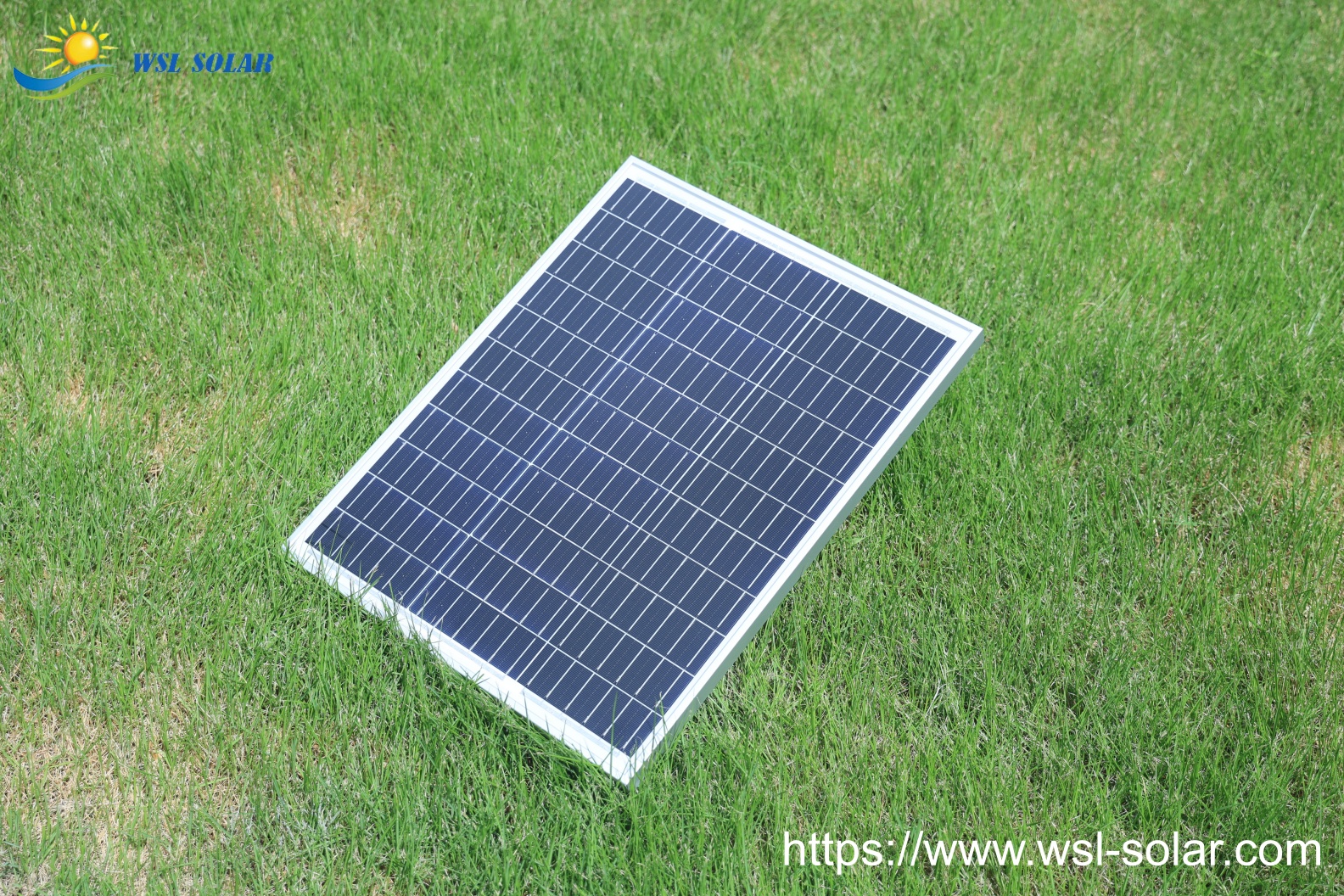
A solar panel acts like a series string of solar cells where the current output is limited by the weakest (or most shaded) solar cell. If just one solar cell is blocked, it stops producing power and begins acting like a high resistance, forcing the entire solar panel's output to drop near zero.
 Solutions to Mitigate Power Loss
1. Implement Bypass Diodes
Solutions to Mitigate Power Loss
1. Implement Bypass Diodes
-
How it works: A bypass diode is wired in parallel to a group of solar cells, but in reverse polarity. Under normal light, the solar cell voltage keeps the diode off (as an open circuit). If a solar cell is shaded, its voltage drops; the diode then turns on, creating a low-resistance path for the current to bypass the shaded solar cell(s) entirely.
-
The effect: You will only lose the power of the specific blocked substring rather than the whole solar panel.
-
Which diode to use: Use Schottky diodes (such as the 1N5817 or similar series) because they have a low forward voltage drop (approx 0.4 V), which prevents excess power from being wasted as heat. Ensure the diode's current rating is at least 1.4 x higher than the solar panel's short-circuit current.
2. Use a Boost MPPT Charge Controller
-
How it works: Bypass diodes cause the voltage-current (V-I) curve of your solar panel to have multiple peaks (or "steps"). A basic charge controller will lock onto an inefficient local peak during shading events.
-
The effect: An MPPT module is designed to continuously sweep the V-I curve to find the new true maximum power point, ensuring you extract the absolute highest possible wattage from the unshaded solar cells.
-
Hardware: For 5.5V, modules like the LTC3105 or similar ultra-low-power boost converters work very well for harvesting micro-solar energy.
3. Parallel String Configuration
-
If your 10 small solar cells are accessible, an alternative to standard series strings is wiring them into smaller, parallel-connected blocks. In this configuration, you would also need to add blocking diodes so that heavily shaded blocks don't drain power from the illuminated ones.
What is a Schottky Diode?
A
Schottky diode (also known as a Schottky barrier diode or hot-carrier diode) is a highly efficient semiconductor device that allows current to flow in only one direction. Unlike standard diodes made from two semiconductors (P-type and N-type), it is formed by joining a metal with an N-type semiconductor.
Key Characteristics
-
Low Forward Voltage Drop: Traditional silicon diodes require about 0.7 V to start conducting, whereas Schottky diodes require only 0.15 V to 0.45 V. This significantly reduces power loss and heat generation.
-
Fast Switching Speeds: Because they use majority carriers (electrons) rather than minority carriers, they do not suffer from charge-storage delays. They can switch on and off almost instantly.
-
High Frequency: Their ultra-fast response time makes them ideal for high-frequency applications like RF (radio frequency) circuits and microwave communications.
Common Applications
Because of their efficiency and speed, Schottky diodes are heavily used in modern electronics:
-
Power Supplies: Used in switching power regulators and DC-DC converters to maximize energy efficiency.
-
Solar Panels: Act as blocking diodes to prevent reverse current from discharging the battery when the sun isn't shining.
-
Overvoltage Protection: Used in clamping circuits and logic gates (like Schottky TTL) to protect sensitive digital components from voltage spikes.
Limitations
While highly capable, Schottky diodes are generally more sensitive to temperature changes and usually exhibit a higher reverse leakage current (meaning tiny amounts of electricity might flow backward) compared to standard PN junction diodes.
Posted by Carrie Wong / WSL Solar
WSL Solar has been a quality and professional manufacturer of
custom solar panels, solar mini panels, IoT solar panels and solar solution provider in China since 2006.
https://www.wsl-solar.com